Adho Mukha Svanasana
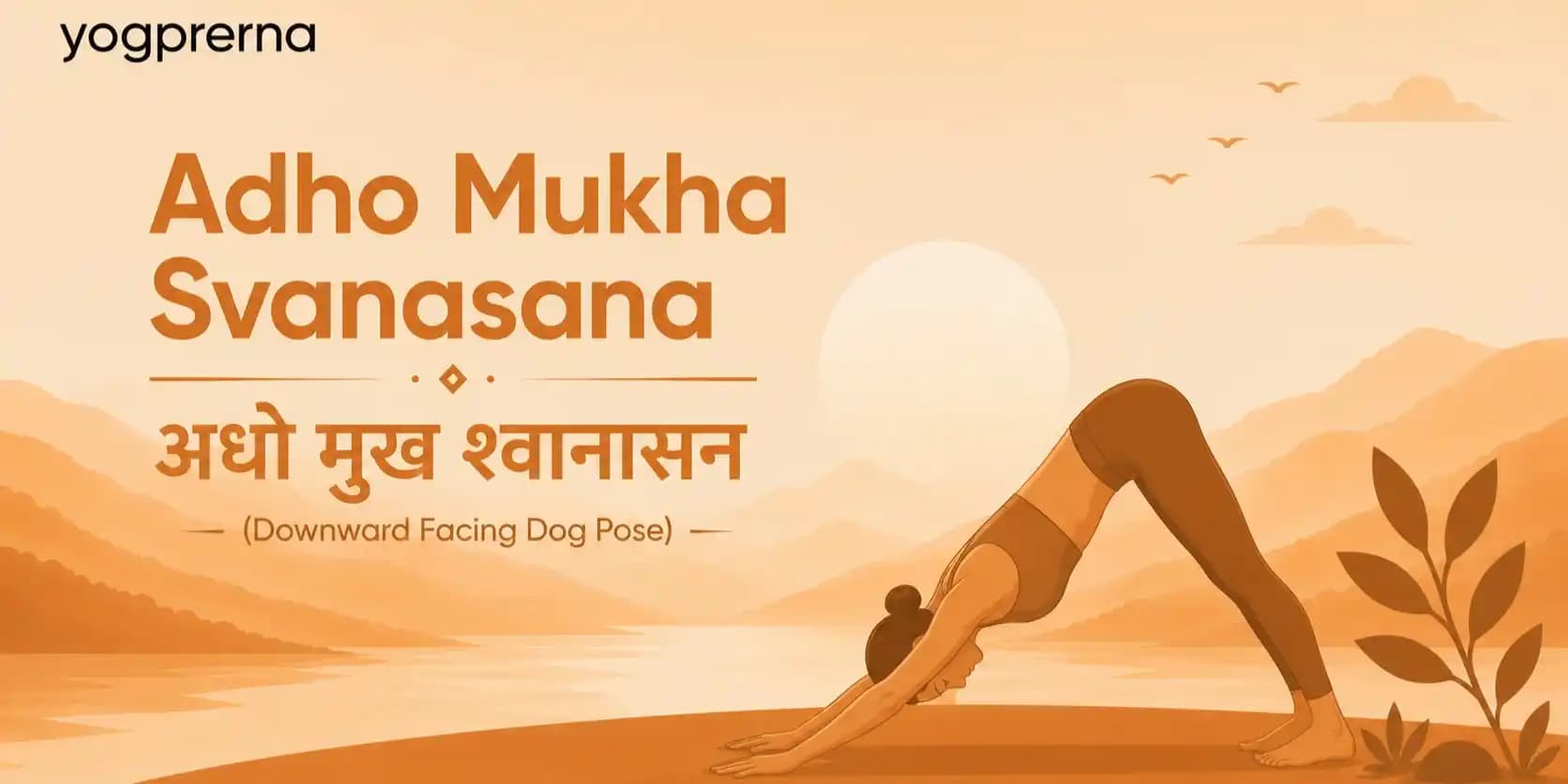
Adho Mukha Svanasana, commonly referred to as Downward-Facing Dog, is one of the most foundational and recognizable postures in yoga. Functioning simultaneously as a mild inversion, a full-body structural stretch, and a resting posture, it forms an inverted "V" shape that creates space throughout the entire posterior chain while anchoring upper body strength.
The upper body foundation begins at the hands, placed shoulder-width apart with fingers spread wide. Grounding firmly through the index finger mounds and thumb bases protects the wrists while establishing an active upper body connection. The arms remain straight, with the upper arms externally rotating—turning the biceps forward—to broaden the upper back and prevent shoulder impingement.
The spine achieves maximum elongation as the hips push up and back toward the sky, tipping the pelvis slightly forward. This axial extension lengthens the vertebral column from the sacrum all the way to the base of the neck. The head hangs freely between the upper arms, releasing cervical spine tension while keeping the gaze soft and directed toward the navel or ankles.
The lower body provides the counter-anchor for the posture. The feet sit parallel and hip-width apart. The quadriceps engage strongly to pull the kneecaps upward, facilitating the release of the hamstrings and calves. While the heels reach toward the mat, touching the floor is secondary to maintaining a flat, unrounded lower back; a slight bend in the knees is used whenever hamstring tightness threatens lumbar alignment.
The inverted "V" orientation uses gravity to gently lengthen the spine, relieving pressure on the intervertebral discs.
Simultaneously stretches the hamstrings, calves, Achilles tendons, arches of the feet, and latissimus dorsi muscles.
Builds functional strength across the wrists, forearms, triceps, serratus anterior, and shoulder girdle.
Placing the heart above the head increases circulation to the brain, helping calm the central nervous system and alleviate mild fatigue or headaches.
Alignment Note: A common mistake is dumping excessive body weight forward into the wrists and shoulders, turning the pose into a partial plank. Constantly focus on pressing the mat away with your palms to drive your weight back into your legs and hips.
| Variation | Purpose | Description |
|---|---|---|
| Bent-Knee Variation | Lumbar protection & hamstring relief | Keeping a generous bend in the knees allows tight hamstrings to release, prioritizing a long, flat spine over straight legs. |
| Eka Pada Svanasana | Core stability & hip opening | Lifting one leg high behind you in line with the torso transforms the pose into Three-Legged Dog, increasing single-leg leverage and balance. |
| Blocks Under Hands | Wrist pressure relief | Placing firm yoga blocks beneath the palms elevates the forearms, reducing the wrist extension angle for practitioners with joint discomfort. |
Adho Mukha Svanasana (Downward-Facing Dog Pose) is a foundational yoga posture in which the body forms an inverted "V" shape with the hands and feet firmly grounded. It is commonly practiced in Sun Salutations (Surya Namaskar) and many yoga sequences to build strength, flexibility, and balance.
Adho Mukha Svanasana strengthens the arms, shoulders, wrists, and legs while stretching the hamstrings, calves, spine, and shoulders. It helps improve posture, enhances flexibility, supports spinal alignment, increases circulation, and promotes full-body awareness. The pose also helps relieve stiffness after prolonged sitting.
Begin in a tabletop position with your hands shoulder-width apart and knees hip-width apart. Tuck your toes under and lift your hips toward the ceiling, straightening your arms and legs as much as comfortable. Press your palms firmly into the mat, lengthen your spine, relax your neck, and keep your head between your upper arms while breathing steadily.
Yes. Adho Mukha Svanasana is suitable for beginners, although it may feel challenging initially. Beginners can keep their knees slightly bent to maintain a long spine and avoid unnecessary strain on the hamstrings or lower back while gradually building flexibility and strength.
Most practitioners hold the pose for 30 seconds to 1 minute, or for 5–10 slow breaths. During dynamic yoga sequences like Surya Namaskar, it is often held for several breaths before transitioning to the next posture.
The pose stretches the hamstrings, calves, Achilles tendons, shoulders, chest, and spine. It strengthens the shoulders, arms, wrists, upper back, abdominal muscles, quadriceps, and lower legs while improving overall body stability.
Adho Mukha Svanasana is commonly associated with the Muladhara (Root Chakra) because it promotes grounding and stability. Many yoga traditions also connect it with the Manipura (Solar Plexus Chakra) due to the engagement of the core and development of inner strength.
Common mistakes include rounding the back, placing too much weight on the wrists, locking the knees, shrugging the shoulders toward the ears, collapsing the chest, and forcing the heels to touch the floor. Focusing on a long spine is more important than keeping the legs completely straight.