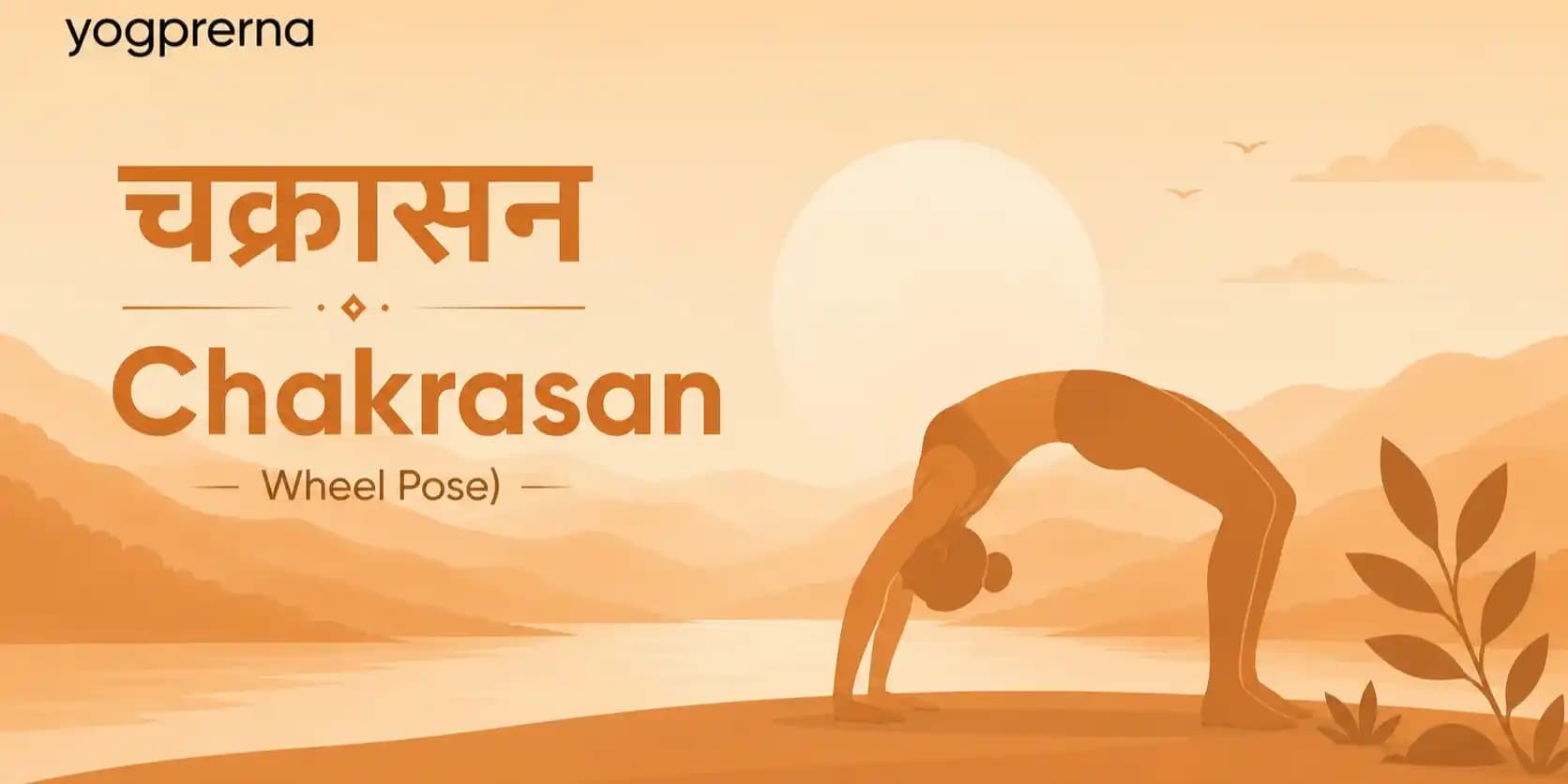
Chakrasan
Chakrasana, commonly known as Wheel Pose, is a profound and invigorating backbend that completely opens the anterior channel of the body. It represents a powerful synthesis of full-body flexibility, spinal mobility, and upper body strength. Rather than relying solely on the flexibility of the lower back, this posture demands an active harmony between the core, shoulders, and legs to create a balanced, structural arch.
The foundation of the pose relies heavily on a solid four-point base shared between the hands and the feet. The feet sit parallel, hip-width apart, with the heels tracking close to the sitting bones to maximize leverage. The palms place flat on the floor alongside the head, fingers turned back toward the shoulders, with the elbows hugging tightly into the midline rather than flaring outward.
During the ascent, the primary power engine comes from the lower body. Driving down through all four corners of the feet activates the hamstrings and glutes to lift the pelvis. To protect the lumbar spine, the inner thighs rotate slightly inward, keeping the knees from splaying apart. Simultaneously, the arms push dynamically away from the earth, engaging the triceps and shoulder stabilizers to lift the upper torso and head completely off the mat.
Once fully extended, the pose achieves its maximum structural expression through the chest and spine. The thoracic spine (upper back) undergoes deep extension as the chest presses forward toward the wall behind you. The arms and legs straighten to your safe capacity, creating a uniform arc rather than a sharp hinge in the lower back. The head hangs naturally between the shoulders, releasing tension in the cervical spine, while the expansion of the ribcage allows for deep, controlled intercostal breathing.
The intense stretch across the intercostal muscles and chest expands the ribcage, improving lung capacity and encouraging deeper oxygen intake.
Pushing the full body weight off the floor builds exceptional strength in the triceps, shoulders, wrists, and the entire back muscular chain.
It counteracts the chronic flexion of modern daily life by stretching the hip flexors, abdominal wall, and deep spinal stabilizers.
As a deep inversion and backbend, it increases blood circulation toward the brain and stimulates the central nervous system, boosting energy levels.
Alignment Note: A frequent error is letting the feet and knees turn outward during the lift. This pinches the lower back and compresses the sacroiliac (SI) joint. Keeping the feet parallel and actively pressing down through the big toe mounds keeps the lower spine protected and spacious.
| Variation | Purpose | Description |
|---|---|---|
| Supported Wheel | Building endurance & opening | Placing blocks securely against a wall at an angle under the hands reduces pressure on tight wrists and shoulders, allowing for a safer lift. |
| Eka Pada Chakrasana | Advanced stability & strength | From the full pose, one leg is lifted straight up toward the sky, shifting the balance onto three points and deepening core engagement. |
| Chakrasana Prep (Bridge) | Developing foundational strength | Keeping the shoulders and head grounded while lifting only the hips acts as an ideal warm-up to prepare the legs and spine for the full backbend. |
Wheel Pose (Chakrasana), also known as Upward Bow Pose (Urdhva Dhanurasana), is an advanced backbend that strengthens the body, improves flexibility, and opens the chest and shoulders.
Wheel Pose strengthens the arms, shoulders, legs, back, and core while improving spinal flexibility, posture, lung capacity, and overall energy levels.
Wheel Pose is an advanced yoga pose. Beginners should first build strength and flexibility with preparatory poses before attempting it under the guidance of a qualified yoga instructor.
Wheel Pose engages the arms, shoulders, chest, back, core, glutes, quadriceps, hamstrings, and hip flexors.
Beginners can hold the pose for 5–10 seconds, while experienced practitioners may hold it for 15–30 seconds with steady breathing.
Yes, if your body is properly conditioned. Avoid overtraining and allow adequate recovery if you experience soreness or discomfort.
Yes. Regular practice increases flexibility in the spine while strengthening the muscles that support proper posture.