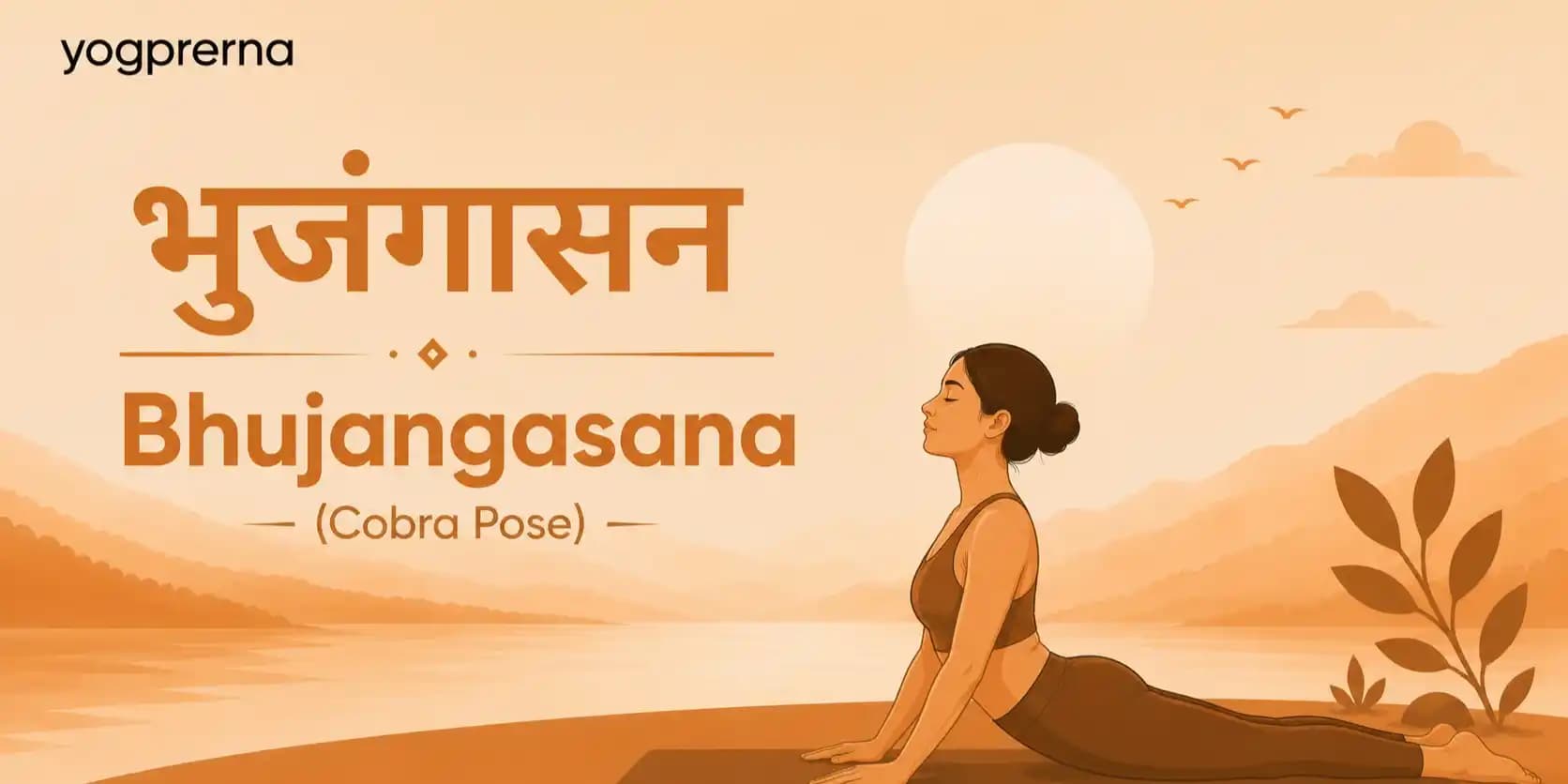
Bhujangasana
Bhujangasana, derived from the Sanskrit word Bhujanga (meaning "serpent" or "cobra"), is a classic prone backbend that symbolizes strength, fluidity, and heart opening. As a core posture in traditional Surya Namaskar (Sun Salutations), it revitalizes the posterior chain while counteracting the daily slouch caused by sitting and computer work. Rather than forcing height through the arms, true Bhujangasana uses the deep extensors of the spine to create a safe, graceful arch.
The foundation establishes itself firmly on the mat through the lower body. The legs extend straight back with the tops of the feet pressing evenly into the ground. Grounding through the pubic bone and active engagement of the quadriceps stabilizes the pelvis, preventing lower back compression. The inner thighs rotate slightly inward to maintain space across the sacrum.
The upper body lift relies primarily on muscular engagement across the back, rather than mechanical pushing from the hands. The palms anchor flat beneath the shoulders, with the elbows hugging tightly into the ribcage pointing straight back. On an inhalation, the upper chest, collarbones, and sternum peel away from the floor.
The neck remains a long, natural extension of the thoracic spine rather than cranking backward. Drawing the shoulder blades down the back broadens the collarbones, opening the heart space while keeping the gaze soft and directed straight ahead. The breath flows deeply into the ribcage, supporting the lift from within.
Tones the erector spinae, deep vertebral stabilizers, and gluteal muscles to support better posture.
Delivers a therapeutic stretch across the chest, shoulders, abdominal wall, and intercostal muscles.
The gentle pressure against the mat massages internal digestive organs, supporting digestion and sluggish elimination.
Opening the thoracic cavity increases lung capacity and circulation, helping clear sluggishness and mild stress.
Alignment Note: Avoid the common habit of locking out your elbows and jamming your shoulders up toward your ears. A true Cobra Pose prioritizes spinal length and upper back strength over how high you lift off the floor.
| Variation | Purpose | Description |
|---|---|---|
| Baby Cobra (Ardha Bhujangasana) | Developing pure back strength | Hovering the hands an inch off the floor ensures the lift comes entirely from the back muscles without hand assistance. |
| Sphinx Pose (Salamba Bhujangasana) | Lower back & wrist comfort | Resting on the forearms with elbows stacked under shoulders reduces the backbend angle for long, gentle holds. |
| King Cobra (Raja Bhujangasana) | Advanced full-body arch | Bending the knees to bring the soles of the feet toward the crown of the head while deepening the backbend. |
Bhujangasana (Cobra Pose) is a gentle backbend in which you lie on your stomach and lift your chest using the strength of your back muscles while lightly supporting yourself with your hands. It is a foundational yoga posture commonly included in Surya Namaskar (Sun Salutation) and many beginner-friendly yoga sequences.
Bhujangasana strengthens the back, shoulders, and arms while stretching the chest, abdomen, and front of the body. It helps improve posture, enhances spinal flexibility, opens the chest, supports healthy breathing, and relieves stiffness caused by prolonged sitting.
Lie face down with your legs extended and the tops of your feet pressing into the mat. Place your palms under your shoulders with your elbows close to your body. Inhale as you gently lift your chest using your back muscles, keeping your shoulders relaxed and your elbows slightly bent. Hold the pose while breathing steadily, then exhale and slowly lower your chest back to the mat.
Yes. Bhujangasana is a beginner-friendly backbend when practiced with proper alignment. Beginners should lift only as high as is comfortable without forcing the lower back and focus on lengthening the spine rather than creating a deep arch.
Most practitioners hold Bhujangasana for 15–30 seconds or 3–5 slow, deep breaths. The duration can gradually increase as flexibility, strength, and comfort improve.
Bhujangasana stretches the chest, shoulders, abdomen, hip flexors, and front of the torso. It strengthens the spinal muscles, lower back, glutes, shoulders, arms, and upper back while improving overall spinal stability.
Bhujangasana is most commonly associated with the Anahata (Heart Chakra) because it expands the chest and encourages openness. Many yoga traditions also associate it with the Manipura (Solar Plexus Chakra) due to the activation of the abdominal region and development of inner strength.
Common mistakes include over-arching the lower back, locking the elbows, lifting the shoulders toward the ears, placing too much weight on the hands, and forcing the neck backward. Keeping the elbows slightly bent, shoulders relaxed, and lifting primarily with the back muscles helps maintain proper alignment.
People with recent back injuries, herniated discs, severe spinal conditions, wrist injuries, recent abdominal surgery, or pregnancy should practice Bhujangasana with caution or under the guidance of a qualified yoga instructor. The pose should never cause sharp or intense pain.
Yes. Regular practice of Bhujangasana strengthens the muscles that support the spine, opens the chest, and counteracts the effects of prolonged sitting and rounded shoulders. These benefits can contribute to improved posture over time.